GoDaddy vs Namecheap vs Cloudflare: Where Should You Actually Buy Your Domain?
A plain-English comparison of three popular places to buy a domain — GoDaddy, Namecheap, and Cloudflare — and how to figure out which one is right for you.
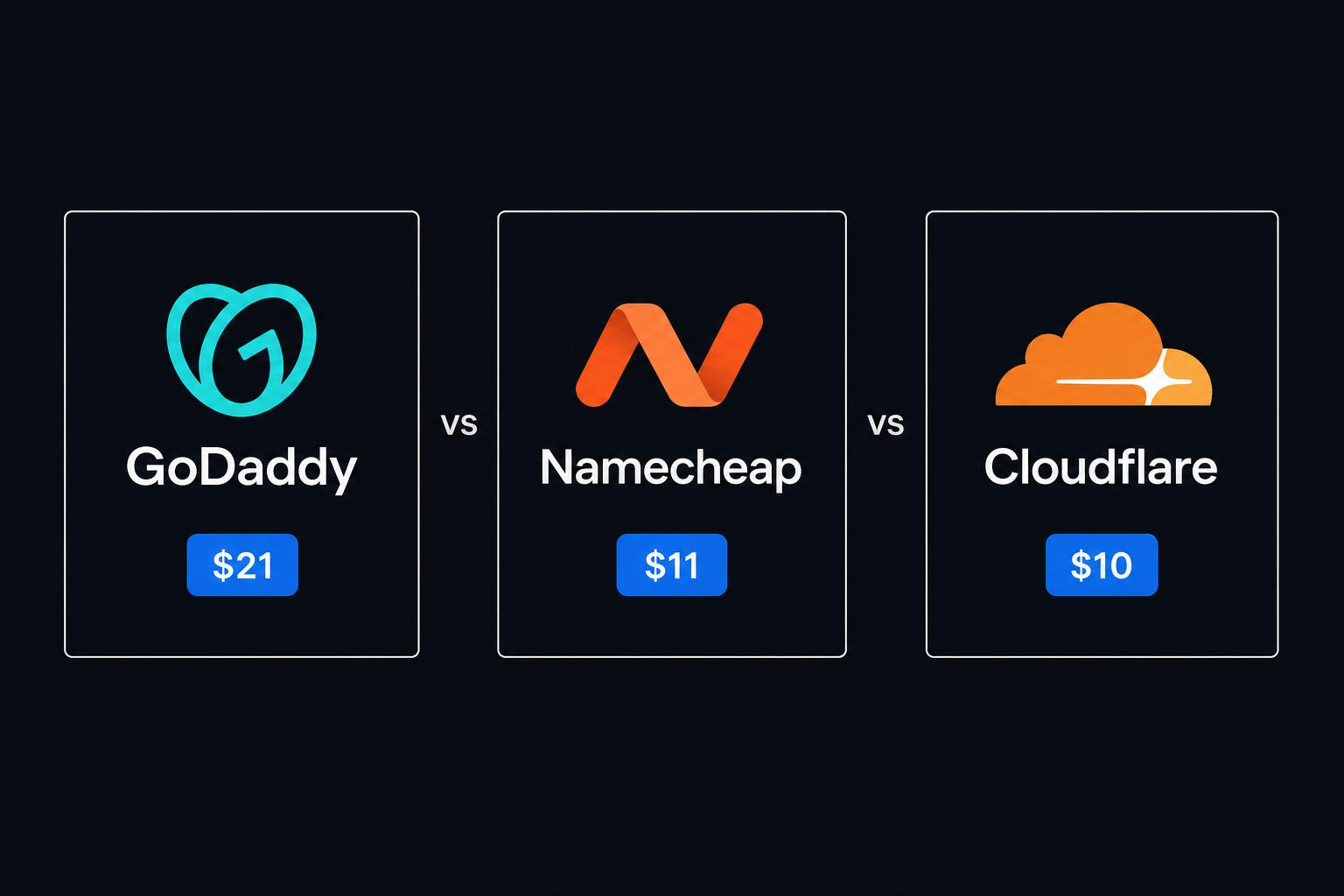
If you've started shopping for a domain, you've almost certainly run into these three names. GoDaddy is the giant everyone's heard of. Namecheap is the scrappy favourite. Cloudflare is the one techy friends keep recommending. They all sell domains — so why do their prices and reputations differ so much? Let's break it down in plain terms.
GoDaddy: the big, familiar one
GoDaddy is the most recognised domain company in the world, and for a lot of people that familiarity is reassuring. The interface is polished, support is easy to reach, and they sell everything — domains, hosting, email, website builders — under one roof.
The catch is price. GoDaddy is known for attractive first-year deals followed by noticeably higher renewals, and for nudging you toward add-ons at checkout (privacy protection, extra security, hosting bundles). None of that is a scam — plenty of people happily use GoDaddy for years — but if your goal is the lowest long-term cost, you'll want to check the renewal price carefully and untick the extras you don't need.
Namecheap: the budget favourite
Namecheap built its reputation on doing exactly what the name suggests: keeping domains affordable. Their renewal prices tend to be more reasonable than GoDaddy's, and they include free WHOIS privacy (which hides your personal details from the public domain record) at no extra charge — something others sometimes upsell.
For most everyday buyers — someone launching a small business, a portfolio, a side project — Namecheap hits a sweet spot of fair pricing and a friendly enough interface. It's a popular default for good reason.
Cloudflare: the at-cost option
Cloudflare is the interesting one. They sell domains essentially at cost — meaning they don't mark up the wholesale price the way most registrars do. The first-year price and the renewal price are usually the same, and often lower than anyone else, because they're not trying to profit on the domain itself. They make their money elsewhere, on their security and performance products.
The trade-off: Cloudflare is built for people who are comfortable with a more technical, no-frills setup. There's no hand-holding, no upsells, and you generally need to use their systems to manage the domain. If that doesn't scare you, it's often the cheapest honest price you'll find.
So which should you pick?
Here's the honest answer: it depends on what you value. If you want maximum hand-holding and brand familiarity and don't mind paying a bit more, GoDaddy is fine. If you want a fair balance of price and ease for a normal project, Namecheap is a safe bet. If you want the lowest stable price and you're comfortable being a little more hands-on, Cloudflare is hard to beat.
But — and this is the important part — prices change constantly, and they vary by extension. Cloudflare might be cheapest for a .com but not available for some newer extensions. GoDaddy might run an aggressive promo on .io this month. Namecheap might have the best deal on .org. The "best" registrar isn't fixed; it's whoever's cheapest for the specific domain you want, right now.
That's the whole reason a comparison tool exists. Instead of guessing or loyalty-buying, you check the actual current price for your exact domain across all of them at once, and pick the winner. The names matter less than the numbers.
Curious who's actually cheapest for your domain today? Search it on MyDomainCost and compare all three side by side — plus 40 more.
Compare a domain →