Every .com Gets 71 Cents More Expensive on November 1
Verisign is raising the .com wholesale price from $10.26 to $10.97 on 1 November 2026. What it means for what you actually pay, and the one thing worth doing before then.
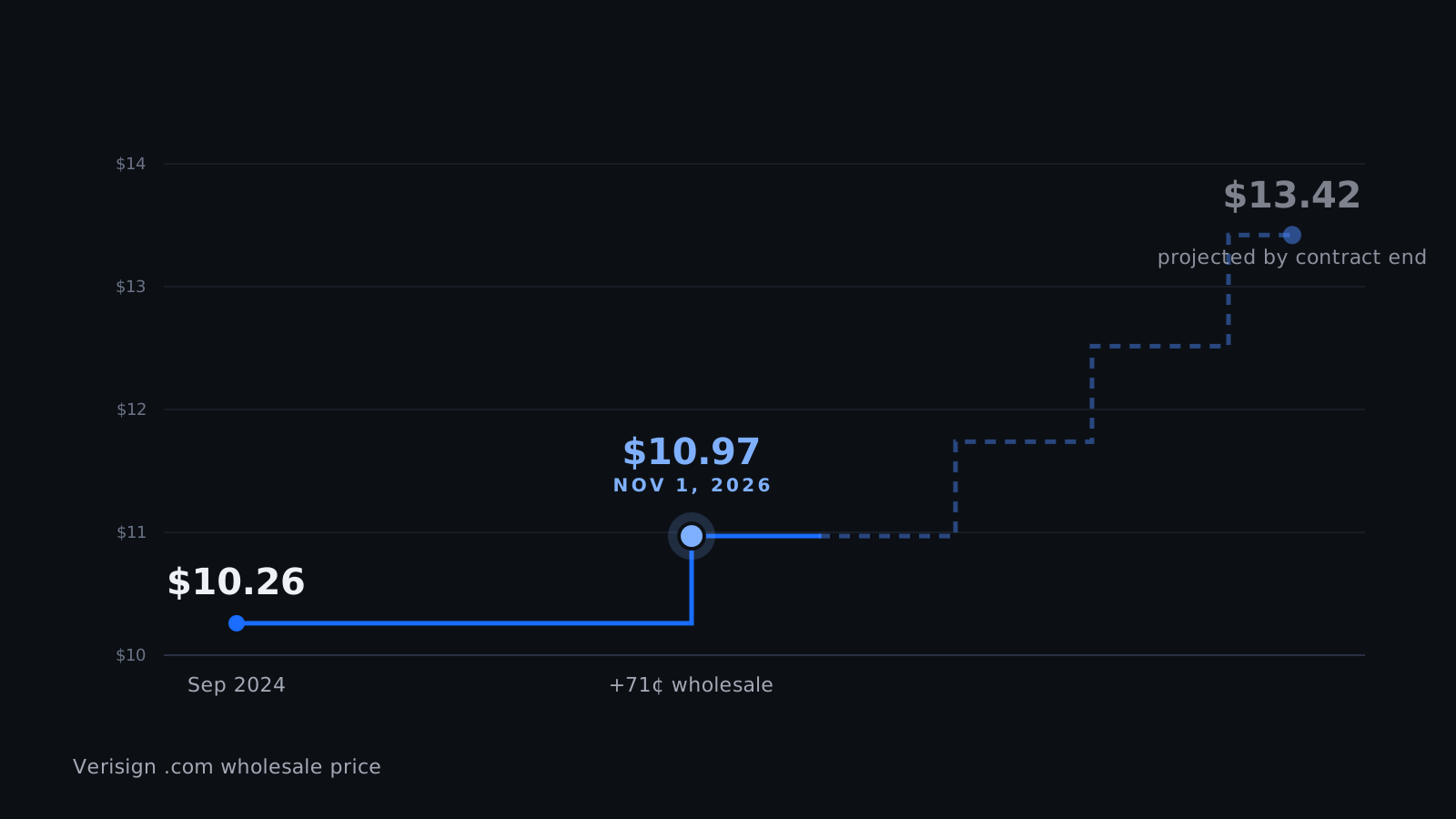
On 1 November, the wholesale price of every .com domain on the internet goes up by 71 cents, from $10.26 to $10.97 a year. Verisign announced it back in April, buried in a quarterly earnings call, and almost nobody outside the domain industry noticed.
Seventy-one cents. Verisign's CEO pointed out it works out to about three cents a day, which is true and also exactly the kind of thing you say when you're raising prices.
Here's what it actually means for you, and who should bother doing anything about it.
What's actually changing
Verisign runs the .com registry. It doesn't sell domains to you — it's contractually prohibited from doing that. It sells to accredited registrars at a regulated, capped price, and they mark it up and sell to you.
That capped wholesale price is what's moving. $10.26 today, $10.97 from 1 November. Add ICANN's fixed fee of about 20 cents and you've got the hard floor that every registrar on earth pays before they've made a single cent.
The increase is 7%, which is the maximum Verisign is allowed to take. Its arrangement with ICANN and the US Department of Commerce lets it raise prices by up to 7% in each of the final four years of a six-year contract period. The current period started in October 2024, which is why this is the first increase since 2024.
Verisign has never once declined to take an increase it was entitled to, apart from a freeze in the first pandemic year. If it keeps taking the full 7% every year it's allowed to, the wholesale floor reaches about $13.42 by the end of this contract cycle.
So this isn't a one-off. It's the second step of a staircase.
What you'll actually pay
This is the part that matters, and it isn't 71 cents.
Registrars don't pass wholesale increases through at cost. They pass them through at whatever their pricing strategy says. Right now the floor is $10.26 and GoDaddy renews a .com at $21.99, so the markup already runs to more than double the wholesale price at some registrars. A 71-cent registry increase gives everyone in the chain a reasonable-sounding excuse to move their own number, and the retail increase is frequently larger than the wholesale one.
Cloudflare sells at cost and will presumably keep doing exactly that. Porkbun's list price is its renewal price and always has been. The registrars whose whole model is a cheap first year and a fat renewal have considerably more room to be creative.
Which is the actual story here: the registry increase is small and unavoidable, and the registrar markup is large and entirely avoidable.
Should you do anything?
Honestly, for most people, no.
If you own one domain, this costs you 71 cents a year at wholesale, and realistically a couple of dollars once your registrar has had its say. It's not worth an afternoon. Go and do something else.
If you own a lot of domains, the maths changes. Thirty domains means the wholesale increase alone is about $21 a year, and if your registrar uses the moment to add three dollars a domain instead of seventy-one cents, you're looking at $90 a year for nothing.
There's one genuinely useful thing you can do, and it has a deadline.
Renew early, if you're going to renew anyway
A domain can be registered up to ten years out. If you renew or extend before your registrar's price change takes effect, you pay today's rate for those years, and every added year is a year that dodges this increase and any future ones.
So if you have a domain you're certain you're keeping for the next several years, adding years now costs you nothing you weren't already going to spend, and locks the current price in. That's it. That's the whole trick.
Two caveats. Registrars set their own change dates and some of them move before 1 November, not on it, so don't leave it until the last week of October. And don't extend a domain you're not sure about, because prepaying five years on something you'll abandon in March is a worse deal than the price increase ever was.
If you're going to move a domain to a cheaper registrar, do that first, then extend at the new place. Transferring usually adds a year at the new registrar's rate anyway. Just remember ICANN locks a domain for 60 days after any transfer, so a transfer plan that starts in late October is a plan that misses the deadline.
The bigger number nobody's talking about
Verisign is raising prices into strength. Its .com and .net base hit a record of 176.1 million names this year, with the strongest run of new registrations since 2021 and renewal rates going up rather than down. People are not leaving .com. That's precisely why the price can go up.
And .net hasn't been touched yet. Verisign has room to raise .net by up to 10% a year and simply hasn't announced anything. Worth knowing if you're sitting on a pile of them.
None of this is a crisis. A .com at $11 wholesale is still the cheapest sensible extension on the internet, and it's still less than a fifth of what a .ai costs annually.
But 71 cents at the registry can become three dollars at checkout, and whether it does depends entirely on who you bought from. That part was always in your hands.
Find out what your .com actually renews at across every major registrar — before the change hits. Search it on MyDomainCost.
Compare a domain →